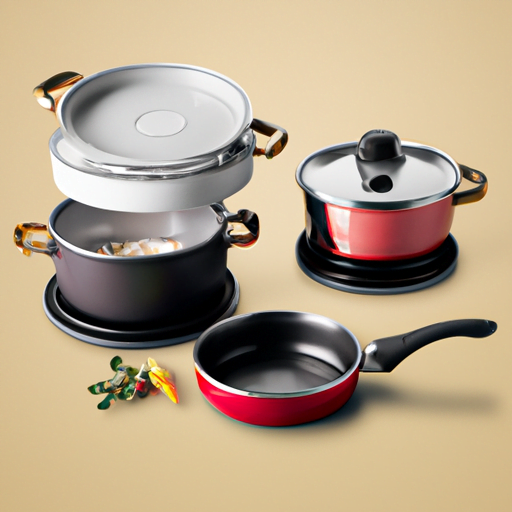
Are you considering upgrading your cookware set but unsure of which material to go with? This article will provide you with information on the pros and cons of aluminum, stainless steel, and ceramic cookware. Learn how each material affects heat distribution and the factors to consider when selecting the right cookware for your kitchen. Armed with this knowledge, you can make an informed decision and find the ideal set to meet your cooking needs.
Aluminum Cookware
Aluminum cookware is lightweight and conducts heat well, making it a popular choice in many kitchens. Its durability and low maintenance requirements are also appealing to busy cooks. However, there are some health concerns associated with aluminum cookware that you should be aware of.
One potential issue is the reaction between aluminum and acidic foods. When these foods come into contact with the metal, a small amount of aluminum can leach into the food. While this is generally considered safe in small amounts, some studies have suggested a link between high levels of aluminum intake and certain health conditions.
To minimize any potential risks, there are safety precautions you can take when using aluminum cookware. Avoid cooking highly acidic foods for long periods in aluminum pots or pans, as prolonged exposure can increase the amount of leaching. Additionally, it’s recommended to avoid using scratched or damaged aluminum cookware, as this can make it more likely for the metal to react with food.
Overall, while aluminum cookware offers benefits such as its lightweight nature and excellent heat conductivity, it’s important to weigh these advantages against the potential health concerns and take appropriate precautions for safe use.
Stainless Steel Cookware
Stainless steel cookware is known for its durability and resistance to corrosion. Cleaning stainless steel is relatively easy, as it can withstand high temperatures and is dishwasher safe. The non-reactive nature of stainless steel makes it ideal for cooking acidic foods like tomatoes or citrus-based dishes without altering their taste. Additionally, stainless steel cookware does not leach any harmful chemicals into your food, ensuring a healthier cooking experience. Another benefit of stainless steel cookware is its versatility – you can use it on any type of stove, including induction cooktops. It also distributes heat evenly, which helps in achieving consistent cooking results. While stainless steel may be more expensive than other materials, its long lifespan makes it a worthwhile investment for any home chef.
Ceramic Cookware
Ceramic cookware is known for its non-stick surface and even heat distribution, making it a popular choice among home cooks. One advantage of ceramic cookware is its ability to withstand high temperatures, allowing you to cook at higher heat without worrying about damaging the surface. Additionally, it is scratch-resistant and does not react with acidic or alkaline ingredients, ensuring that your food remains safe and healthy. However, there are also disadvantages to consider. Ceramic cookware can be more fragile compared to other materials, so you need to handle it with care to avoid chipping or cracking. It may also require special cleaning methods as some detergents or abrasive scrubbers can damage the non-stick coating. Despite these drawbacks, many people appreciate the benefits that ceramic cookware brings to their kitchen.
Comparison of Heat Distribution
One advantage of ceramic cookware is that it provides even heat distribution, ensuring that your food is cooked evenly. Ceramic cookware has excellent heat retention properties which means that it can retain heat for a longer period of time compared to other materials like stainless steel or aluminum. This allows your food to stay warm even after you turn off the stove, making it perfect for serving dishes at the table. Additionally, ceramic cookware has good conductivity, meaning that it efficiently transfers heat from the stove to the food. This helps in cooking your meals faster and more efficiently. So if you want consistently cooked dishes with great heat distribution and retention, ceramic cookware is a fantastic option for you.
Considerations for Choosing the Right Cookware Material
When choosing the right cookware material, you should consider factors such as durability and heat conductivity. Non-stick coatings are an important consideration for many people when selecting cookware. Aluminum and ceramic cookware often have non-stick coatings that make cooking and cleaning easier. However, these coatings can wear off over time with frequent use or harsh cleaning methods. Stainless steel, on the other hand, does not typically come with a non-stick coating but is known for its durability. Stainless steel cookware can withstand high temperatures and is resistant to scratches and dents. If durability is a top priority for you, stainless steel may be the best choice. Additionally, considering factors like how well each material conducts heat will help ensure even cooking results every time you step foot in the kitchen.