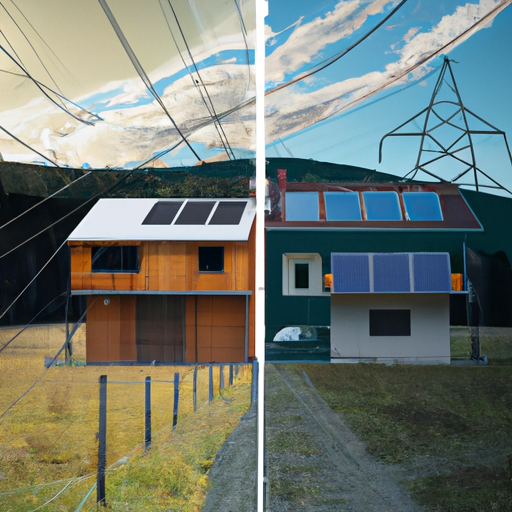
Are you considering investing in solar power but unsure whether to go with a grid tie or off grid inverter? Well, we’re here to help! In this article, we’ll break down the basics and weigh the pros and cons of both options. By the end, you’ll have a clear understanding of what factors to consider when making your decision. So, let’s dive in and help you choose between a grid tie or off grid inverter that suits your needs perfectly.
Understanding the Basics of Grid Tie and Off Grid Inverters
To understand the basics of grid tie and off grid inverters, you need to know how they differ in terms of electricity generation and usage. Grid tie inverters are designed to work in conjunction with a utility power grid. They convert the direct current (DC) produced by solar panels into alternating current (AC), which is then fed into the grid. One advantage of grid tie inverters is that excess energy can be sold back to the utility company, earning you credits on your electricity bill. However, a disadvantage is that they do not provide backup power during outages. On the other hand, off grid inverters are used in standalone systems where there is no access to a utility power grid. They store excess energy in batteries for later use when solar production is low or non-existent. The key difference between these two types of inverters lies in their connection to the electrical grid and their ability to provide backup power.
Pros and Cons of Grid Tie Inverters
Consider the advantages and disadvantages of using grid tie inverters for your solar power system. Grid tie inverters have several advantages that make them a popular choice for many homeowners. One major advantage is that they allow you to sell excess electricity back to the grid, earning you credits or even money from your utility company. Additionally, grid tie inverters require less maintenance compared to off-grid systems since they do not rely on batteries. However, there are also some disadvantages to consider before choosing a grid tie inverter. The main disadvantage is that when the power goes out, your solar panels will automatically shut down for safety reasons, meaning you won’t have access to electricity during an outage. Furthermore, if the grid itself experiences an outage, your solar panels will not be able to generate power either.
Pros and Cons of Off Grid Inverters
If you want to be completely self-sufficient with your solar power system, an off-grid inverter may be the right choice for you. Off-grid inverters have several advantages that make them appealing to those looking to disconnect from the grid. One advantage is the ability to store excess energy in batteries, allowing you to use it at night or during cloudy days. Another advantage is the flexibility and independence it provides, as you are not reliant on utility companies for your energy needs. However, there are also some disadvantages to consider. Off-grid inverters can be more expensive than grid-tie inverters due to the additional components required, such as batteries and charge controllers. Additionally, maintenance and monitoring of battery health can be more time-consuming and require specialized knowledge.
Factors to Consider When Choosing Between Grid Tie and Off Grid Inverters
When deciding on an inverter, you’ll want to think about your energy needs and whether you want to stay connected to the grid or be completely self-sufficient. One important factor to consider is the cost comparison between grid tie and off grid inverters. Grid tie inverters are generally less expensive since they don’t require additional energy storage options. With a grid tie inverter, any excess electricity generated can be sold back to the utility company, potentially reducing your overall costs. On the other hand, off grid inverters require energy storage options such as batteries, which can add significantly to the upfront costs. However, being off grid allows for complete self-sufficiency and independence from utility companies. So when making a decision, weigh the cost comparison and consider your energy storage needs accordingly.
Making the Right Choice: Grid Tie or Off Grid Inverter?
To make the right choice between a grid tie and off grid inverter, you’ll need to evaluate your energy needs and determine whether staying connected to the grid or being completely self-sufficient is more important to you. When it comes to grid tie vs battery backup, one key factor to consider is the cost effectiveness of grid tie inverters. These inverters allow you to generate your own electricity while still remaining connected to the utility grid. This means that any excess power you generate can be fed back into the grid, potentially earning you credits or reducing your monthly bills. On the other hand, if being completely independent from the grid is a priority for you, an off-grid inverter with battery backup would be more suitable. It provides autonomy and ensures a constant supply of power even during outages. Ultimately, weigh your options and choose what best aligns with your energy goals and budget.